Views: 0 Author: Site Editor Publish Time: 2026-09-10 Origin: Site


Designing your dream space often begins by scrolling through endless digital portfolios. But relying on a glowing monitor to choose your color scheme is incredibly risky. Ordering a full set of kitchen cabinets based on a digital rendering or showroom lighting is a high-risk gamble. Screen calibration and artificial lighting distort undertones, turning a desired "warm greige" into a sterile, cold blue in your actual home.
Physical samples are the only verifiable way to evaluate color accuracy, finish durability, and material quality before committing to a multi-thousand-dollar purchase. You need to see how the finish behaves under your own roof. We created this guide to help you bypass common design pitfalls and make an informed, data-driven decision.
Our goal is to equip buyers with an objective, stress-tested framework to evaluate sample doors, decode cabinet specifications, and confidently select the right supplier. By mastering this evaluation process, you guarantee your final installation matches your original vision perfectly.
Gray is arguably the most complex neutral color in interior design. It is highly reactive to its environment. When you browse online for gray kitchen cabinets, you see a heavily processed image. Computer monitors use RGB light profiles to display color. This digital environment cannot replicate the physical properties of paint or wood finishes.
This brings us to the phenomenon of metamerism. Metamerism occurs when two colors appear to match under one light source but look completely different under another. Gray pigments are notoriously susceptible to this effect. A shade might look perfectly neutral on a website. However, it will shift drastically depending on the light source's color temperature, measured in Kelvins. A low-Kelvin warm bulb makes gray look muddy. A high-Kelvin cool bulb makes it look icy.
You also face a massive disconnect between showroom and home realities. Showroom lighting is specifically engineered to sell products. Retailers use bright, multi-directional spotlights to eliminate shadows and enhance warmth. Your home does not replicate this environment. Your kitchen features specific directional light from windows. It has unique reflective surfaces, like your floors and appliances. These elements drastically alter the cabinet's appearance in your specific space.
Finally, we must consider texture and sheen. Digital mockups fail completely here. They cannot replicate how a matte, satin, or high-gloss finish interacts with light. Matte finishes absorb light, making the gray appear deeper and more muted. Satin and gloss finishes reflect light, which can wash out the color. More importantly, digital screens cannot show you how easily a finish reveals fingerprints, dust, or smudges during daily use. Only a physical door sample provides this crucial tactile feedback.
Holding a small swatch against a wall will not give you accurate results. To truly understand how your new kitchen cabinets will look and perform, you must run a structured evaluation. Use this four-step framework in your home before making a final purchase.
Prop the sample door up exactly where the cabinets will be installed. Use painter's tape to secure it to your existing lower or upper cabinets. Do not lay them flat on a countertop or kitchen island. Horizontal planes catch light directly from above. This extra light makes the sample skew much lighter than it will appear once installed. Vertical positioning shows you realistic shadowing.
You must document how the gray undertone shifts throughout the day. Check the sample at three specific times and write down your observations. Gray is a chameleon color. You need to know its personality in all conditions.
Table: Sample 24-Hour Light Audit Log
| Time of Day | Light Source | Visual Observation of Undertone | User Action / Decision |
|---|---|---|---|
| 8:00 AM | East-facing windows (Natural) | Slight blue tint appears on the edges. | Check if wall paint balances the coolness. |
| 2:00 PM | Direct Overhead Sun | Color appears two shades lighter. | Ensure the resulting light gray still offers contrast. |
| 8:00 PM | 2700K Kitchen Ceiling LEDs | Warms up significantly; hints of brown. | Verify it does not clash with warm wood floors. |
Your cabinets do not exist in a vacuum. Compare the sample directly against fixed elements you are not changing. This includes flooring, existing countertops, backsplashes, and wall paint. Place the sample directly next to your flooring. If your floor has strong warm wood tones, a cool gray cabinet might clash unpleasantly. We recommend testing samples against both vertical and horizontal fixed elements.
Samples are not just for looking at; they are for testing. You want to gauge the sample's resilience to common kitchen hazards. Wipe it with a damp microfiber cloth to see if it leaves water streaks. Check its resistance to mild cooking oils by placing a tiny drop on the corner and wiping it away after ten minutes. Finally, perform a gentle scratch test on the back of the sample using a fingernail. This reveals the hardness of the topcoat.
Looking past the paint is critical. A beautiful gray finish means nothing if the underlying structure fails a few years down the line. Use the physical sample door to gauge the manufacturer's overall build standards. The weight, joinery, and edge details tell a story about factory quality.
First, conduct a core material evaluation. You need to differentiate between medium-density fiberboard (MDF) and plywood. Many buyers assume solid wood is always best, but this is a common mistake for painted doors. Solid wood expands and contracts with humidity changes. This movement causes hairline cracks at the joints of painted doors. MDF is excellent for painted gray finishes because it remains completely stable, preventing cracking. Conversely, plywood boxes are superior for structural integrity, holding screws better and resisting sagging over time.
Next, scrutinize the finish application. Check the edges, seams, and routed profiles of the sample. Run your fingers along the edges. Are there drips, inconsistent coverage, or visible gaps in the edge banding? A rough edge indicates a rushed manufacturing process. High-quality gray kitchen cabinets specifications will always mandate multi-step baked-on finishes. They do not rely on just a single coat of spray paint. Look for a smooth, factory-cured topcoat that feels hard to the touch.
Finally, inspect the hardware and joinery. If your sample order includes a drawer front or a small drawer box, look closely at the corners. High-quality drawers use dovetail joinery, which interlocks the wood for maximum strength. You should also inquire about the soft-close hinge mechanisms used by the brand. Premium mechanisms, such as those from Blum or DTC, ensure smooth operation and prevent slamming. The quality of the sample often reflects the quality of the hardware they package with the final order.
Mastering undertones is the secret to a cohesive design. Gray is never just gray. It leans either warm or cool, and selecting the wrong undertone disrupts your entire home aesthetic. Navigating warm versus cool grays requires careful planning.
Cool grays carry blue or green undertones. They feel crisp, clean, and modern. These shades are best for contemporary spaces. They pair beautifully with bright white quartz counters, stainless steel appliances, and abundant natural light. However, using cool grays in a north-facing room can make the space feel sterile or unwelcoming.
Warm grays, often referred to as greige, carry brown or yellow undertones. They offer a softer, more inviting aesthetic. These are best for transitional spaces. Warm grays pair exceptionally well with natural wood floors, butcher block counters, and brass hardware. They add depth without creating a harsh contrast.
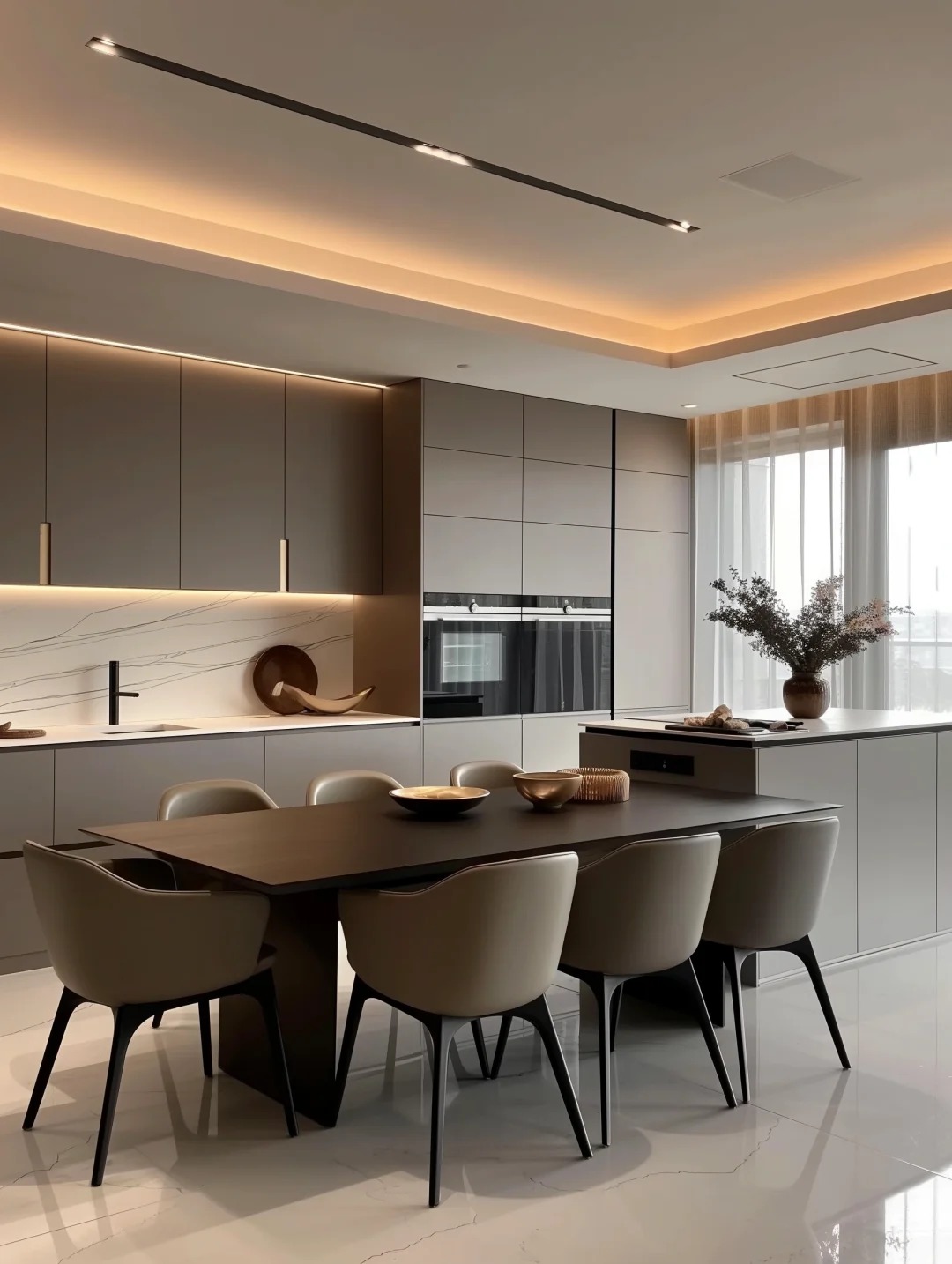
Choosing the right tone is vital for anchoring open-concept spaces. Modern homes often blend the kitchen directly into the dining or living room. Utilizing the right gray shade can seamlessly bridge cooking and living areas. A balanced mid-tone gray acts as a neutral backdrop. This approach creates elegant and functional open kitchen cabinets that do not overwhelm the visual space. The cabinets become a sophisticated architectural feature rather than a dominant visual distraction.
Hardware pairing also relies entirely on your chosen undertone. Different grays dictate specific hardware choices. If you select warm grays, pair them with brushed brass, antique bronze, or warm copper. These finishes highlight the brown notes in the paint. If you choose cool grays, pair them with polished chrome, brushed nickel, or matte black. Matte black provides a striking, high-contrast modern look against a cool, light gray door.
The sample phase offers more than just color verification. It serves as a real-world test of the company’s logistics and customer care. The sample acts as a proxy for service. How a company handles a $20 sample order is a strong indicator of how they will handle a $15,000 full-kitchen order.
You should establish strict evaluation criteria for a reliable gray kitchen cabinets supplier. Do not ignore red flags during this early stage.
By paying attention to these administrative details during the sample phase, you protect yourself from massive logistical headaches later. A beautiful sample is useless if the supplier cannot deliver the full kitchen reliably.
Remodel success requires minimizing assumptions at every stage of the project. Ordering and rigorously comparing physical samples is the absolute cheapest insurance policy against a costly kitchen design mistake. Digital screens lie, and showroom lighting deceives. Your own home environment is the only proving ground that matters.
As a next-step action, we advise you to shortlist three to four distinct gray profiles. Ensure you span warm, cool, light, and dark options. Order full-door samples rather than small color swatches. Once they arrive, mount them vertically, begin your 24-hour home lighting audit, and confidently choose the perfect foundation for your new space.
A: Always opt for a full sample door if available. Small swatches do not show the profile detailing, edge finishing, or how shadows play across shaker or raised panel designs. A full door gives you the exact tactile and visual experience you will have in your finished kitchen.
A: Most reputable suppliers charge a nominal fee for the sample and shipping, but will apply that cost as a credit or discount when you place your final full-kitchen order. Always verify the supplier's sample credit policy before checking out.
A: Limit your samples to 3–4 options (spanning light, medium, warm, and cool). Ordering too many causes decision fatigue. Rely on your initial design thesis and mood boards to narrow the field first, then use physical samples to pick the final winner.


