Views: 0 Author: Site Editor Publish Time: 2026-09-03 Origin: Site


Bathrooms act as extreme micro-climates inside your home. High humidity, rapid temperature fluctuations, and pooling water quickly destroy inferior materials. You need robust construction to survive this harsh daily environment. Replacing a failed cabinet involves expensive plumbing adjustments, new tile work, and costly labor. Choosing the right material upfront remains a critical risk-management decision. It saves you thousands in premature replacement costs.
We will break down cabinet bases and countertop materials objectively. You will discover exactly how to evaluate dimensional stability, moisture resistance, and long-term structural integrity. This guide cuts through misleading marketing jargon. We focus on real-world performance metrics. You will learn how joinery techniques and hardware tolerances dictate everyday reliability. Our evidence-based approach gives you the knowledge you need for a smart, long-lasting purchase.
Cabinet Base Winner: High-quality exterior-grade or marine-grade Plywood offers the best balance of structural strength and resistance to humidity-induced warping.
Countertop Winner: Engineered Quartz outperforms natural stone in bathrooms due to its non-porous, stain-resistant, and maintenance-free profile.
The MDF Reality: While cost-effective, standard MDF is highly vulnerable to permanent swelling if the veneer or edge banding is compromised.
Specification Matters: Durability isn't just about the primary material; joinery (e.g., dovetail) and hardware (e.g., stainless steel hinges) dictate the true lifespan of a bathroom vanity.
Most cabinets do not fail from old age. They fail because water exploits structural weaknesses. Understanding these failure points helps you evaluate materials correctly. A well-built bathroom vanity must survive three primary threats daily.
You must differentiate between direct water exposure and ambient humidity. Direct exposure comes from plumbing leaks, wet hands, or splashed sink water. Ambient humidity results from hot showers. Steam permeates the air and enters cabinet materials invisibly. Poor materials absorb this moisture. They act like a sponge. The core swells, destroying the aesthetic finish forever.
Wood naturally responds to climate changes. It expands in humid conditions. It contracts in dry winter air. This constant shifting creates dimensional instability. Repeated movement cracks painted finishes. It delaminates wood veneers. It eventually warps cabinet doors so they no longer close properly. Superior materials resist this movement naturally.
Modern sink setups weigh heavily on the cabinet frame. Natural stone countertops add immense downward pressure. Under-mount porcelain sinks pull directly on the top joints. A weak cabinet box will sag over time. Sagging breaks the silicone seal along the wall. Broken seals allow water to leak behind the cabinet, breeding hidden mold.
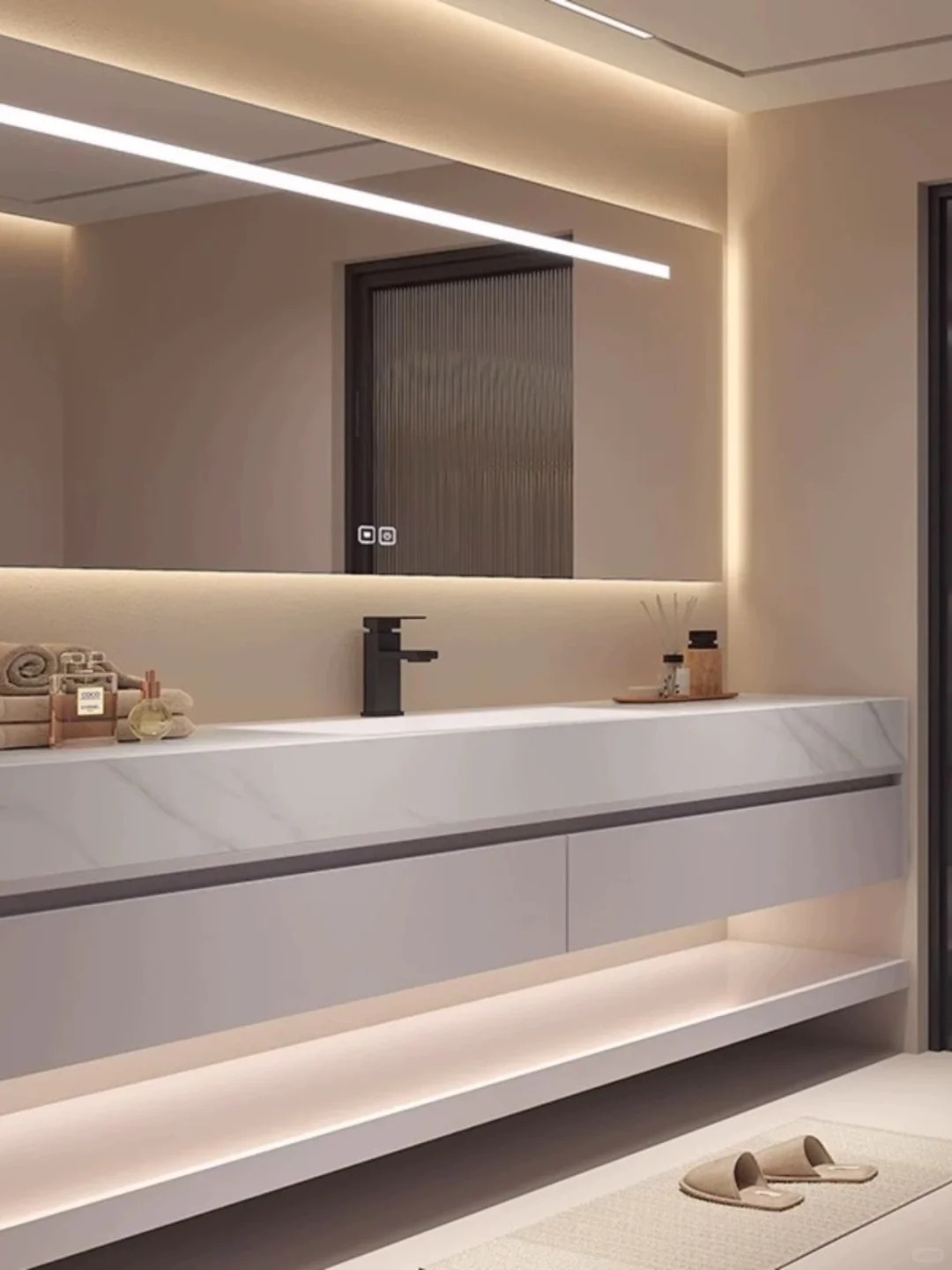
The core material dictates the cabinet's lifespan. Manufacturers typically use one of three main materials. Let us evaluate their real-world performance in high-humidity zones.
Many homeowners consider solid wood the ultimate premium option. It offers high tensile strength. You can easily sand and repair surface scratches. It supports massive loads without sagging. Solid oak, maple, and cherry possess undeniable natural beauty.
However, professional woodworkers recognize its severe limitations in bathrooms. Solid wood acts as a living organism. It aggressively absorbs ambient steam. It expands rapidly across the grain. This expansion forces stile-and-rail joints to separate. Painted solid wood almost always shows hairline cracks at the joints within one year. We only recommend solid wood for well-ventilated powder rooms.
Engineers designed plywood to solve wood's natural movement problem. Manufacturers glue thin sheets of wood veneer together. They alternate the grain direction of every layer. This cross-grain construction physically traps the wood. It prevents warping and offers superior dimensional stability.
Plywood securely holds heavy screws. This prevents hinges from sagging over decades of use. When evaluating plywood, always check the ply count. Look for 7-ply to 9-ply hardwood constructions. Insist on exterior-grade or marine-grade water-resistant adhesives. These glues stop the layers from separating if a minor plumbing leak occurs.
MDF consists of tiny wood fibers pressed together under high heat. Particleboard uses larger wood chips. MDF provides a perfectly smooth surface. It accepts paint flawlessly. It remains highly cost-effective for budget-conscious projects.
Despite these benefits, standard MDF carries massive structural risks. It holds screws poorly compared to plywood. More importantly, MDF reacts catastrophically to water. If water breaches the protective laminate, the exposed core swells permanently. It crumbles and loses all structural integrity. You cannot repair swollen MDF. We strongly advise against using standard MDF in high-traffic full bathrooms.
Table 1: Cabinet Core Material Comparison
Material Type | Moisture Resistance | Screw Holding Power | Warping Risk |
|---|---|---|---|
Solid Wood | Moderate | Excellent | High (Expands/Contracts) |
Hardwood Plywood | High | Very Good | Low (Cross-grain stability) |
Standard MDF | Low | Fair | Low (But swells permanently) |
Your countertop takes the most abuse. It faces acidic cosmetics, hot curling irons, and constant water pooling. You need a surface designed to repel these daily threats effortlessly.
Engineered quartz dominates modern bathroom design. Factories mix roughly 90% crushed natural quartz crystals with advanced polymer resins. This precise mixture creates a completely non-porous slab.
Quartz requires zero sealing. It naturally repels water. It shrugs off stubborn makeup stains and harsh toothpaste residue. Bacteria cannot penetrate the surface. This makes it incredibly hygienic. The resin acts as a flexible binder. This prevents the top from cracking if someone drops a heavy glass bottle. Quartz delivers premium aesthetics without the maintenance headache.
Granite and marble offer unmatched organic beauty. They provide excellent heat resistance. You can place hot styling tools directly on granite without fear of scorching.
However, natural stone poses serious implementation risks. It remains inherently porous. Unsealed marble quickly absorbs spilled liquids. Hard water leaves permanent cloudy spots. Acidic cleaning products etch the surface instantly. You must apply a penetrating sealer every six to twelve months. If you forget, you risk irreversible staining. Choose natural stone only if you commit to strict maintenance routines.
Many modern setups use a molded porcelain top. These designs feature an integrated sink basin. This seamless construction eliminates the caulk line between the sink and the counter. Caulk lines represent a major failure point where mold frequently grows.
Manufacturers fire porcelain at extremely high temperatures. This creates a glass-like glaze. The surface achieves ultimate scratch and water resistance. You can clean it aggressively without causing damage. It remains an excellent, low-maintenance option for high-use family bathrooms.
Technology transforms how we interact with our bathrooms. Integrating smart features demands stronger structural support. You cannot rely on basic builder-grade materials when wiring and electronics enter the equation.
Designing a modern bathroom vanity with intelligent mirror requires advanced planning. Smart mirrors contain heavy glass layers. They house thick anti-fog heating pads. They integrate complex touch-sensor panels.
The cabinet base must provide heavy structural backing. You need thick plywood cross-bracing to anchor these massive units securely to the wall. Weak particleboard backs will rip out under the sheer weight of modern integrated mirror systems.
Smart setups often include built-in LED drivers, internal outlets, and USB charging ports. You must protect this internal wiring. If steam penetrates a cheap MDF cabinet, the wood swells. Swelling shifts the internal panels.
Panel shifting pinches concealed electrical wires. It creates dangerous short circuits. Plywood maintains rigid dimensional stability. It acts as a reliable structural vault. It protects delicate electronic components from moisture ingress and physical shifting.
Do not trust vague marketing language. Phrases like "all-wood construction" often legally include cheap particleboard. You must learn to read spec sheets accurately to validate your investment.
Detailed bathroom vanity specifications reveal the true quality of a unit. You need to look beyond the exterior finish. Check the thickness of the side panels. Demand at least half-inch thick plywood for structural sides. Look for three-quarter-inch thickness for structural shelves. Verify the specific type of finish applied to the wood. Multi-step polyurethane conversion varnishes provide the best waterproof barrier.
Edge banding covers the raw, exposed edges of engineered wood. Cheap manufacturers use standard EVA hot melt glue to apply edge banding. EVA glue melts when exposed to hot steam. The edge peels away, inviting water inside.
Always verify the manufacturer uses PUR (Polyurethane Reactive) waterproof glue. PUR glue undergoes a chemical reaction. It cures permanently. Heat and steam cannot melt PUR glue. It locks moisture out effectively.
Look inside the drawers. High-quality construction uses dovetail joinery. The wood pieces interlock physically. This prevents the drawer front from pulling off after years of heavy tugging.
Examine the cabinet frame corners. You should see reinforced wooden corner blocks screwed into place. Avoid any cabinet assembled strictly with staples or glued butt-joints. Stapled joints loosen quickly under normal vibration and use.
The hinges take massive abuse. Specify soft-close hinges to prevent slamming. Slamming rattles the cabinet joints and loosens screws. Insist on six-way adjustable hinges. These allow you to perfectly align the doors even if your bathroom walls sit slightly out of plumb. Check the metal material. Rust-resistant stainless steel or heavily coated brass hinges survive humid environments best.
A great cabinet requires a great manufacturer. Identifying a reliable partner ensures you get exactly what you pay for.
A reputable bathroom vanity supplier operates with complete transparency. They will explicitly state their wood grading standards. Look for CARB Phase 2 compliant materials. This certification ensures the wood adhesives emit dangerously low levels of formaldehyde. Transparent suppliers also willingly disclose the exact origin of their stone or quartz countertops.
Read the warranty details closely. Evaluate specific clauses regarding water damage and veneer delamination. A simple one-year limited warranty often signals lower-grade MDF construction. The manufacturer expects it to fail shortly after the warranty expires.
Conversely, five-year to lifetime warranties indicate supreme confidence. They usually signal commercial-grade plywood cores and premium hardware. Companies only offer long warranties when they know their products survive extreme environments.
Pay attention to logistics. Countertops crack easily during transit. Fully assembled cabinets suffer structural damage if dropped. Ask the supplier how they package heavy, fragile items. Do they use custom foam reinforcement? Do they ship quartz tops securely in vertical A-frames? Mature operational logistics strongly indicate overall product reliability.
Final Verdict: For the highest reliability and best long-term value, specify a plywood-core cabinet paired with an engineered quartz or porcelain top. This combination practically eliminates moisture damage.
Action Step 1: Accurately measure your space and identify your specific plumbing constraints before browsing styles.
Action Step 2: Demand specific joinery and hardware details. Refuse to accept vague "all wood" descriptions.
Action Step 3: Request detailed spec sheets and warranty documentation from shortlisted suppliers before committing your budget.
A: Not necessarily. While solid wood boasts immense strength, it reacts aggressively to humidity. Plywood offers superior dimensional stability. Its cross-grain construction prevents the warping, expanding, and joint-cracking that frequently plagues solid wood in damp bathroom environments.
A: You cannot make standard MDF completely waterproof. You can mitigate risks by sealing raw edges, plumbing cutouts, and bottom panels with clear polyurethane. However, if standing water penetrates the factory laminate layer, the core will still swell irreparably.
A: Engineered Quartz stands out as the most durable option. Its manufacturing process creates a completely non-porous surface. It naturally resists water, cosmetics, and harsh cleaners while requiring absolutely no regular sealing or specialized maintenance.
A: A properly installed unit made of exterior-grade plywood and engineered quartz should last 15 to 20 years or more. Robust dovetail joinery and stainless steel soft-close hardware ensure the structural integrity matches the longevity of the materials.


