Views: 0 Author: Site Editor Publish Time: 2026-06-25 Origin: Site


For real estate developers, builders, and house flippers, kitchen cabinetry is rarely just a design choice. It operates as a massive structural investment. This single decision heavily dictates property valuation, tenant retention, and overall project timelines. You must balance high-end buyer appeal against rigid budget constraints. Supply chain realities require you to move past simple aesthetic preferences. You must critically evaluate suppliers based on manufacturing scalability and material longevity. Ignoring this evaluation causes delayed closings and triggers frequent repair requests. This guide delivers a structured evaluation framework tailored for real estate professionals. We help project managers and investors select the right cabinetry partners. You will discover how to optimize layouts, standardize installations, and verify material quality. Let us secure your project returns without compromising your strict construction schedules.
You must assess the specific project typology before contacting suppliers. Luxury house flips demand unique finishes. They require immediate visual impact to attract premium buyers. Conversely, multi-family housing prioritizes tenant durability above all else. Standardized maintenance takes precedence over bespoke aesthetics in rental units. You should base your sourcing strategy on these distinct operational goals.
Establish your baseline metrics early in the planning phase. We recommend following a structured approach to define your operational constraints:
Acknowledge the risks associated with poor budgeting models. Under-budgeting on wet-area cabinetry guarantees massive maintenance headaches later. Water damage quickly destroys cheap particleboard materials. Conversely, over-spending rarely yields a perfect appraisal increase in mid-tier markets. You must find the precise intersection of durability and visual appeal. High maintenance frequency destroys your long-term margins. Focus on foundational quality rather than superficial luxury upgrades.
We need to differentiate fully custom from semi-custom products clearly. Builders often confuse these terms during procurement. Fully custom kitchen cabinets offer exact sizing specifications. They provide unlimited finish options. We recommend them exclusively for high-end builds featuring irregular architecture. Semi-custom products offer standard sizing parameters. They allow variable finishes and minor modifications. This flexibility makes them the ideal sweet spot for most residential developers.
Consider the immense value of factory partnerships for larger developments. Direct-to-builder relationships benefit large-scale multi-family projects significantly. You unlock massive economies of scale through bulk ordering. Factories enforce strict quality control measures across the production line. You also gain guaranteed access to exact-match replacements for future property maintenance. This is where OEM kitchen cabinets provide distinct advantages. They ensure visual and structural consistency across hundreds of identical units.
Beware of common sourcing pitfalls in the industry. Many overseas suppliers mask standard flat-pack units as custom builds. They avoid offering structural modifications. They rarely provide substantial warranty backing for commercial applications. You must demand structural warranties covering commercial use. Always verify the engineering standards behind the supplier marketing materials.
| Sourcing Model | Primary Application | Customization Level | Lead Time Expectation |
|---|---|---|---|
| Fully Custom | Luxury Single-Family / Historic Rehabs | Unlimited (Exact fractional sizing) | Longest (Highly variable) |
| Semi-Custom | Mid-Tier Flips / Small Multi-Family | Moderate (Standard boxes, custom doors) | Moderate (Predictable) |
| OEM / Direct-to-Builder | Large Multi-Family / Condo Towers | Standardized (Pre-engineered lines) | Phased (Schedule dependent) |
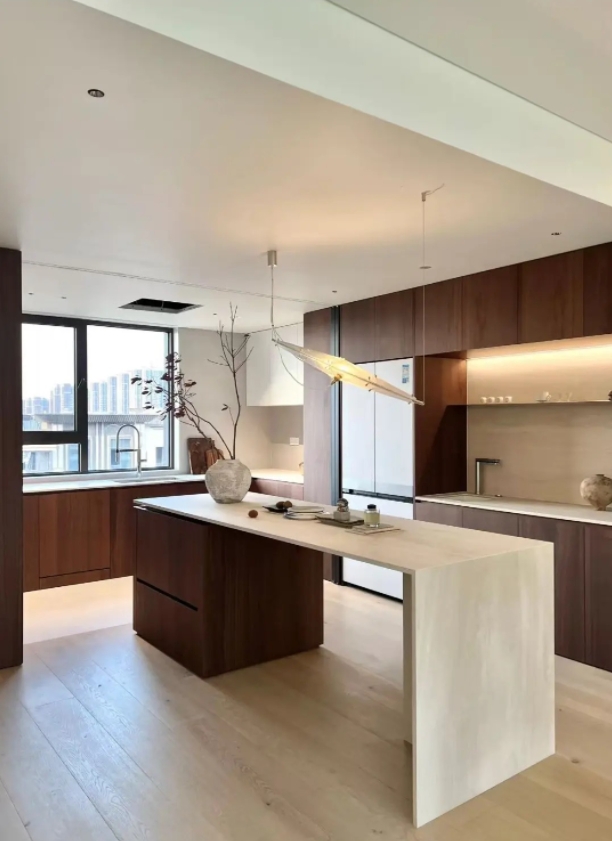
Modern architectural trends dominate real estate projects today. Flat-panel, frameless styles offer incredibly broad demographic appeal. They are significantly easier for tenants to clean. Furthermore, modern kitchen cabinets usually cost less to manufacture than intricate raised-panel designs. The European-style frameless construction maximizes interior storage capacity. This design language aligns perfectly with contemporary buyer expectations across urban and suburban markets.
Standardizing your floor plans saves valuable resources. We highly recommend utilizing L-shaped kitchen cabinets for open-concept flips. They represent the most efficient solution for integrating living and dining spaces. They easily accommodate natural kitchen islands. Plumbers can consolidate wet walls effortlessly in this configuration. For tighter spatial footprints, utilize U-shaped kitchen cabinets. This layout aggressively maximizes storage capacity. It provides extensive counter space within smaller enclosed areas. Urban multi-family rehabs benefit greatly from this wraparound setup.
Design your projects for rapid installation. Standardizing layouts across an entire development minimizes custom filler pieces. You reduce material waste significantly. You also save countless on-site carpenter hours. Less cutting means faster project completion. Installers memorize the standardized assembly steps quickly. This repetition drastically reduces costly installation errors and punch-list delays.
Material truths often surprise novice property developers. We must dispense with the solid wood myth entirely. High-grade plywood outperforms solid wood in wet areas consistently. Moisture-resistant MDF provides superior core stability. They actively prevent structural warping in climate-fluctuating environments. Solid wood panels expand and contract unpredictably. Engineered cores maintain their structural integrity year after year.
Hardware serves as the true metric of longevity. You should evaluate hinges and drawer glides before examining cabinet facings. Industry-standard brands like Blum or Salice indicate premium underlying construction. Soft-close glides are absolutely non-negotiable for modern developments. Full-extension hardware increases perceived buyer value instantly. They extend cabinet life by reducing daily impact stress on the internal joints. The box rarely fails first. The moving parts always dictate the replacement cycle.
Finish durability varies wildly across different manufacturing processes. You must align the finish type with your tenant demographic. Consider these common surface options:
Managing large orders of project kitchen cabinets requires intense logistical oversight. You must understand supplier lead times clearly. Global supply chains differ vastly from domestic production cycles. A reliable manufacturing partner must stage deliveries accurately. They must match your exact construction schedule phasing. Proper delivery staging prevents job-site storage damage. Storing finished wood products in unconditioned framing zones invites moisture damage.
Apply the replacement part test before signing any bulk contract. You must thoroughly evaluate the supplier service level agreement. Ask how quickly they replace damaged doors. Ask about their missing hardware protocols. A twelve-week wait for one replacement door stalls your final building inspection. The ability to expedite replacement components separates tier-one suppliers from unreliable brokers.
| Verification Category | Required Standard | Risk Mitigated |
|---|---|---|
| Lead Time Guarantee | Written penalty clause for delays | Project scheduling cascade failures |
| Replacement SLA | Domestically stocked replacement parts | Delayed occupancy permits |
| Phased Delivery | Shipments aligned with floor-by-floor completion | On-site physical damage and theft |
Verify all environmental compliance documents closely. Check for TSCA Title VI certification immediately. This specific certification guarantees safe formaldehyde emissions. Eco-conscious buyers demand these relevant environmental certifications today. They actively mitigate your future legal liability regarding indoor air quality. Finally, shortlist your vendors carefully. Order a full mock-up unit first. Do not rely on a simple sample door. Test the installation tolerances in real-time. Verify hardware quality under actual load conditions. Commit to a multi-unit purchase order only after successful physical testing.
Choosing custom cabinetry for real estate developments is fundamentally an exercise in risk management. It requires rigorous margin protection alongside interior design considerations. You must align your material choices with the expected lifecycle of the property. Selecting the wrong finish or inferior hardware drains your maintenance budget over time.
We urge project managers to finalize layout standardizations early. Standardized shapes drastically reduce installation errors. Vet your manufacturing partners based on hardware quality and supply chain transparency. Do this long before finalizing your construction blueprints. A beautiful design fails if the factory cannot deliver it on schedule.
Take immediate action to secure your construction timeline. Audit your current supplier lead times today. Request a full commercial quote and a physical mock-up unit for your next development phase. Validating your supply chain now guarantees smoother project handoffs later.
A: The industry standard ranges from 6 to 12 weeks for bulk orders. Domestic manufacturers might hit the shorter end, while overseas suppliers lean toward 12 weeks. You must initiate procurement early in the framing stage to prevent severe scheduling delays.
A: Yes, but you must ask for them specifically. Residential warranties often void under multi-tenant usage. A true commercial warranty covers frequent cycle times on hinges and glides. Always demand documentation detailing multi-tenant coverage before signing a purchase order.
A: Use standard box sizes for 90% of the kitchen layout. Save your custom sizing budget solely for architectural focal points. Invest heavily in custom kitchen islands or tailored range hoods. This strategy delivers high-end visual impact while controlling overall fabrication expenses.
A: No. Frameless cabinets rely on thicker box materials, usually measuring three-quarters of an inch. They are highly structurally sound. As long as they are assembled using commercial-grade dowels and premium hardware, they match or exceed the durability of traditional framed variants.


