Views: 0 Author: Site Editor Publish Time: 2026-09-18 Origin: Site


The aesthetic appeal of minimalist, modern kitchen cabinets often masks deeper homeowner concerns. Buyers frequently wonder about practical durability in high-traffic, harsh environments filled by heat, moisture, and grease. You might love the clean lines, but you also need structural reliability.
Investing in a kitchen remodel requires balancing sleek aesthetics alongside functional longevity. You must know if handle-less designs, gloss finishes, and engineered cores can withstand decades of daily cooking and cleaning without premature degradation. This matters because a beautiful space must also serve as a highly efficient working environment day after day.
In this guide, we provide a hard-lens evaluation of how daily wear impacts modern cabinetry. We strip away generic marketing claims to focus entirely on structural integrity, material resilience, and strict sourcing criteria. You will learn exactly what baseline standards guarantee lasting performance for your home.
Finish Resilience: The durability of modern slab doors depends entirely on the curing and edge-banding processes, not just the surface material.
Hardware Vulnerability: Minimalist, handle-less designs transfer daily physical stress directly to hinges and push-to-open mechanisms, requiring commercial-grade cycle ratings.
Core Stability: Proper substrate materials (like high-density MDF) are superior to solid wood for modern flat-panel doors due to their resistance to climate-induced warping.
Supplier Vetting: Evaluating a vendor requires looking past visual design into their modern kitchen cabinets specifications (e.g., PUR edge banding, European hardware).
Surface finishes face a relentless barrage of wiping, scrubbing, and accidental spills. Frequent cleaning directly affects surface integrity over time. When evaluating high gloss modern kitchen cabinets residential applications, you face a unique challenge. High gloss brilliantly amplifies natural light across your room. However, it also highlights micro-scratches and fingerprints far more visibly than matte or textured wood-grain laminates.
You must understand how daily maintenance routines degrade these surfaces. Wiping away cooking grease often involves paper towels or abrasive sponges. These materials create microscopic abrasions on inferior acrylics. We highly recommend using only soft microfiber cloths. They lift dirt gently and protect the reflective sheen of your investment.
Moisture and heat present even greater threats to surface longevity. Analyze the primary risk zones in your layout. These include the areas directly above boiling kettles, panels flanking dishwashers, and cabinets surrounding hot wall ovens. High temperatures and constant steam expose the hidden vulnerabilities of slab doors.
Delamination remains the biggest risk for flat-panel designs. You must distinguish between standard EVA glue lines and advanced PUR edge banding. Standard EVA glue melts and peels over time. It simply cannot handle repeated blasts of steam from a dishwasher cycle. Conversely, PUR (Polyurethane Reactive) edge banding creates a permanent, waterproof, and heat-resistant seal. This chemical bond ensures the finish stays firmly attached, preventing moisture from swelling the interior core.
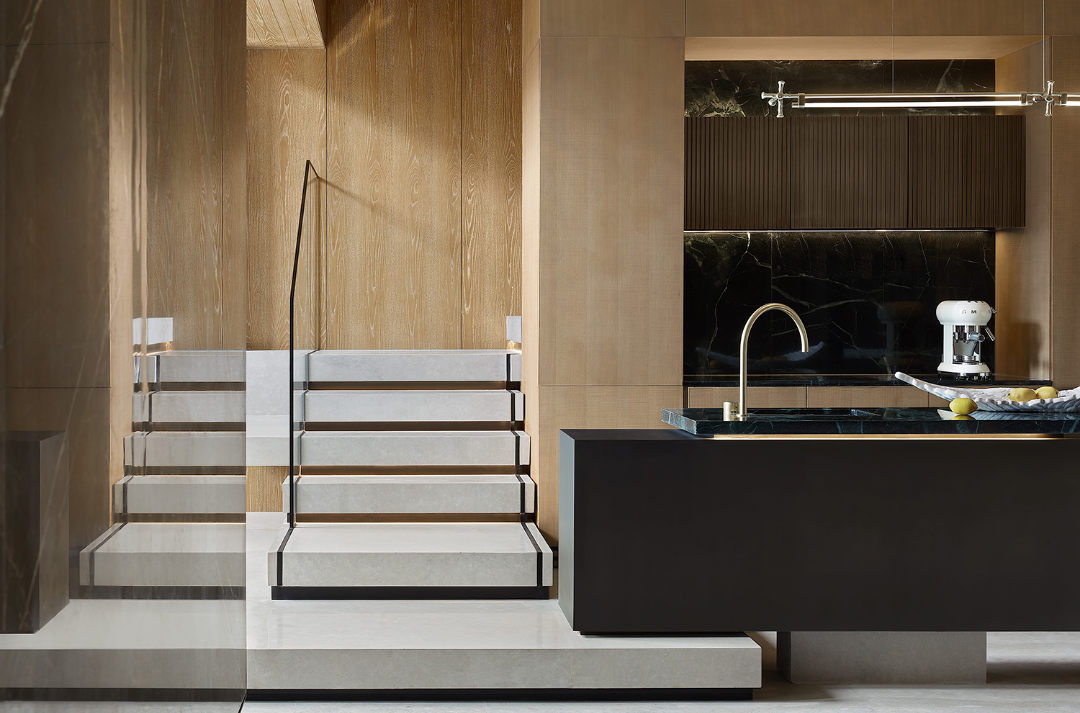
Modern designs often eliminate external pulls entirely. This handle-less compromise forces you to continually grab door edges to access your items. This repeated action exposes vulnerable finish edges to natural skin oils and constant friction. Over several years, acidic skin oils can degrade lower-quality topcoats.
Push-to-open mechanisms bear the brunt of this sleek design choice. They endure tremendous physical stress daily. Cheaper mechanisms utilize weak internal plastic gears. They often lose spring tension after just 10,000 cycles. This mechanical fatigue causes doors to rest slightly open. Even a millimeter gap ruins the seamless visual flow of your modern layout.
Furthermore, modern kitchen cabinets strongly favor wide, deep drawer banks. We frequently install 30- to 36-inch widths designed specifically for storing heavy cast iron pots and bulky pans. This massive weight requires serious engineering support.
You absolutely need heavy-duty, under-mount soft-close glides. They must carry a dynamic load rating of at least 90 pounds. Static load ratings mean nothing when you violently pull a drawer open. Insufficient glide hardware leads to inevitable sagging. Drawers will eventually scrape against the panels below them. Commercial-grade cycle ratings prevent this premature failure and maintain perfect alignment.
Many buyers falsely believe solid wood represents the ultimate premium choice. We must aggressively debunk this myth for modern stylistic applications. Solid wood remains highly susceptible to natural expansion and contraction. Changes in seasonal humidity cause organic timber to swell and shrink unpredictably.
This natural movement destroys the tight 1/8-inch reveals critical to modern design. Uneven gaps make expensive cabinetry look poorly constructed. Therefore, premium modern doors utilize engineered substrates instead.
Here are three structural reasons why engineered cores outperform solid wood:
Dimensional Stability: Engineered materials remain perfectly flat. They never bow, cup, or twist over decades of use.
Climate Resistance: High-Density Fiberboard (HDF) resists extreme humidity fluctuations. It handles coastal or tropical environments effortlessly.
Seamless Finishing: Engineered cores provide a flawless, non-porous surface. This allows lacquers and acrylics to bond perfectly without telegraphing wood grain textures.
Daily use goes far beyond mere survival. It heavily involves acoustic and tactile feedback. When you shut a heavy door, you expect a satisfying, muted thud. Dense engineered substrates prevent that cheap, "hollow" sound. They absorb impact vibrations beautifully. This acoustic dampening contributes significantly to a lasting, premium experience every single time you cook.
Buyers should mandate specific technical criteria before finalizing any purchase agreement. Creating a strict framework for shortlisting protects your financial investment. You must know the exact modern kitchen cabinets specifications to demand from your builder or contractor.
Box construction dictates the structural lifespan of the entire system. You need a minimum of 5/8-inch plywood for the cabinet carcass. Top-tier furniture-board also performs exceptionally well if manufactured correctly. However, a full 3/4-inch thickness provides the absolute best shear strength for heavy stone countertops.
Hardware standards remain equally uncompromising. You need six-way adjustable, all-metal hinges. Premium brands test their hinges to a minimum of 100,000 open/close cycles. This certification ensures decades of flawless articulation.
Coating thickness matters significantly for painted or lacquered doors. Look exclusively for a multi-step polyurethane finish or UV-cured acrylic. UV curing hardens the surface instantly under specialized lights. This prevents future UV fading, scratching, and unsightly yellowing.
Baseline Specification Framework
Component | Minimum Acceptable Standard | Premium Recommendation |
|---|---|---|
Box Construction | 5/8-inch furniture board or plywood | 3/4-inch premium hardwood plywood |
Hinge Hardware | Standard soft-close, 50,000 cycles | Six-way adjustable, 100,000+ cycles |
Drawer Glides | 75 lbs dynamic load rating | 90+ lbs dynamic load under-mount |
Edge Banding | Standard EVA adhesive | PUR (Polyurethane Reactive) adhesive |
Surface Finish | Standard thermofoil or laminate | UV-cured acrylic or multi-step polyurethane |
Warranty transparency quickly separates premium builders from average manufacturers. A lifetime warranty sounds incredible on paper. However, the fine print dictates its true practical value. You must check if the warranty covers finish delamination. Many warranties only cover structural box failure, leaving you responsible for peeling doors.
Replacement part accessibility serves as another critical evaluating factor. Minimalist kitchens rely heavily on perfect visual uniformity. Accidents happen in busy homes. If one door gets deeply gouged in year three, what happens next? Can your modern kitchen cabinets supplier perfectly color-match a single replacement? Or do they aggressively cycle out finishes annually, leaving you completely stranded?
Watch out for glaring vendor red flags during your consultation. Avoid suppliers unable to specify their hardware brands. They should proudly share this engineering data. If they dodge questions regarding edge-banding glue types, walk away immediately. When you invest in high-end modern kitchen cabinets, you deserve absolute material transparency.
Common mistakes during supplier vetting include focusing solely on door samples. You must ask to see a fully constructed cabinet box. Check the rigidity of the back panel. Test the lateral sway of the drawer boxes. Experience dictates that underlying construction matters far more than a glossy facade.
Modern flat-panel cabinetry can easily withstand rigorous daily cooking demands. You simply must prioritize underlying engineering over superficial surface aesthetics. A beautiful facade means nothing if the hinges sag or the edges peel after three years of normal use. By understanding substrate science and hardware physics, you can confidently build a lasting culinary space.
To ensure long-term satisfaction, follow these actionable steps before signing a contract:
Request a physical cross-section sample of the cabinet door to inspect the core material density.
Verify the edge banding utilizes PUR glue rather than standard EVA to prevent heat damage.
Check manufacturer specifications to confirm all internal hardware holds a commercial cycle-rating.
Ensure your chosen surface finish realistically matches your household's daily cleaning habits.
A: With premium acrylics or lacquers and soft microfiber cleaning, they easily last 15 to 20 years. However, lower-end thermo-foils may begin peeling in 5 to 7 years. This deterioration happens fastest near heat sources like ovens and dishwashers. Proper daily maintenance significantly extends their pristine look.
A: Yes, they do. The continuous transfer of natural oils from your hands to the finish requires more frequent wipe-downs. You can mitigate this issue by selecting matte, anti-fingerprint finishes like Fenix. These advanced materials naturally repel smudges and oil buildup.
A: Unlike traditional painted wood, damaged melamine, laminate, or acrylic slab doors usually cannot be patched invisibly. If a severe gouge or chip occurs, the individual door typically requires complete replacement. This ensures you maintain the seamless, uniform aesthetic vital to modern design.


